




The Worth of Our Worship
“Offer your bodies as a living sacrifice, holy and pleasing to God–this is your true and proper worship.”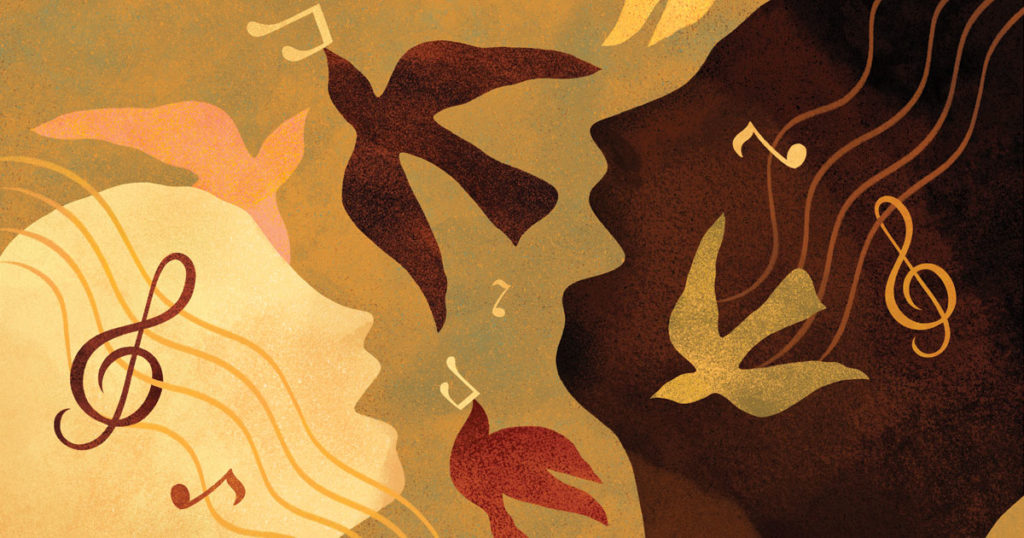
I grew up in a musical family. It’s in my bones, my blood, my being. I became a preschool-aged piano lesson dropout after struggling with all things pedagogy, often sitting at my teacher’s piano in tears, flustered by the flurry of notes sitting on the page, lacking meaning for me.
But singing came naturally, effortlessly, easily — and I loved it. My parents said I picked up melodies quickly, making up my own words to whatever was on the radio, as though I wrote the songs myself. Before I could read, my mom lovingly crafted posterboards with vibrant drawings detailing the lyrics, helping me memorize a whole host of eighties-inspired Sunday School songs turned solo material. Bullfrogs, butterflies, a cross, the face of Jesus — it worked.
My love for music began before I was in grade school and continued to develop through years of non-negotiable instruction, the persistence of my parents, and a lot of other people who pushed me to become better. Eventually, piano became easier, and I developed a passion for what lay beyond the pages of Mozart and Debussy. I discovered that the critical foundation laid created an opportunity for me to consider what else might be out there. My brother, whose piano skills far exceeded mine, helped me uncover the mystery and wonder of playing chords. I enjoyed exploring my vocal range — mimicking those I loved listening to and admired from afar. Soon, contemporary worship and songwriting piqued my interest, quickly becoming something I would come to love and pursue for life.
I give thanks for those early years — for parents who cared enough to steward what God had given. I will always smile at the memory of belting out gospel songs when my brother drove me around as a teenager. (We were obsessed with the soundtrack from The Preacher’s Wife and lauded Whitney Houston for her iconic performance.) I give thanks for a father who helped cultivate within me a deep love for leading others in singing songs on a Sunday morning. He was one of the first to expose the beauty of corporate, contemporary worship to the rest of The Salvation Army on the West Coast. I will never forget being welcomed into that space as a kid — I was maybe six, my brother eleven, when we first began leading worship with my dad. I grew up with Integrity and Marantha music on cassette and still find ways to incorporate many of those classics that many mega churches would scoff at in our worship today.
Time flies. Now in my forties, there remain those who hold the relational currency to speak into my life as a musician, worship leader, and songwriter. Those with whom I have created, led worship alongside, co-written, or collaborated have helped keep me humble and honest, have shown me how to listen to the Holy Spirit and stay responsive, and allowed me space to explore worship beyond the confines of what can be formulaic and scripted. Each person or instance bears significance in the story of my learning to use the gifts God has given to serve a purpose beyond self.
There is a beautiful correlation between how we worship Jesus personally when no one is watching and when we show up to the weighty responsibility of leading others in worship in a corporate setting. You tend to know when someone has been with Jesus. When what we see and experience in a packed room is authentic, vulnerable, open, and deep — I feel assured this is the overflow of someone who has spent time with the King and is not offering something contrived, or that didn’t come at a cost. What we are tasked and privileged to do as worship leaders is simply facilitate space for people to encounter the Living God and be encountered by Him. It’s not prescriptive. It’s not about being perfect. But it is about being prepared — prepared to the greatest extent.
I’ve been in spaces where “being prepared” only meant knowing the song’s roadmap, memorizing the lyrics, listening to the click (that in-ear monitor sound that locks in your tempo), and staying in your lane. I’ve also been in spaces that have swung the pendulum the other way — band members who didn’t listen to the songs beforehand, who were guessing at what to play, and clearly didn’t have much interest in what they brought to the table. Worship was a thing to do, not a sacrifice to offer. And then there’s the best space — where there’s full trust for one another, humility, affordability for correction, flexibility and allowance for moving wherever the Spirit moves. The best space is where a honed skill and personal practice come hand in hand with spiritual depth and a life lived seeking Jesus all week long, where the worth of our worship comes at a cost.
Paul writes to the church, with urgency, saying, “… in view of God’s mercy, offer your bodies as a living sacrifice, holy and pleasing to God—this is your true and proper worship. Do not conform to the pattern of this world, but be transformed by the renewing of your mind” (Romans 12:1-2a NIV). A living sacrifice. A transformed mind. This is a call to an ongoing, continual offering of self to the glory of God. We might at times be in danger of settling for a very wrong definition of “true and proper” when we do not closely examine what flows from our heart and mind, reject the power and presence of the Holy Spirit, and choose to control what is offered at the altar for the sake of comfort and the clock.
I often wonder how we might be transformed were we to see our worship of God as a daily commitment, not a prescribed method reserved for Sunday only? How could our congregations be moved by the Holy Spirit if we did not try to control Him? What if what we brought to the altar was a sacrifice of praise in the truest sense of the word — the culmination of songs sung, prayers prayed, lament unrestrained, and thanksgiving offered all throughout the week. What if worship teams practiced edifying one another and holding each other accountable, together seeking to be transformed by the renewing of their minds so that what overflows into Sunday morning is pure, deep, and intentional? I believe everything could change. The result is a pure bride before Christ, a clean offering of love from a transformed heart and perspective. Worship rightly oriented toward the King whose presence longs to fill every heart and every room.
Maranatha, come, Lord Jesus.
Illustration by Bárbara Tamilin